On Teaching Group Reformer After Four Decades in the Industry
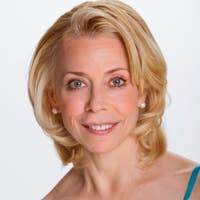
After more than forty years in the Pilates industry, Elizabeth Larkam has taught in nearly every environment imaginable. Pilates has been the focus of her life's work, and for much of her career, she has dedicated herself to private sessions, mentoring and educating instructors, as well as authoring influential books on Pilates, fascia, and movement.
Recently, after returning to Central Texas, where she grew up, Elizabeth stepped into a new chapter: teaching group Reformer classes. What began as curiosity quickly became a meaningful exploration of how Pilates continues to evolve, how the work can meet people where they are today, and the powerful community it builds.
We sat down with Elizabeth to talk about the experience of teaching group classes after decades in the field, the challenges and surprises she encountered, and why she feels optimistic about the future of Pilates.

After more than 40 years in the industry, primarily teaching privates and mentoring teachers, what drew you to teach group Reformer classes at this stage of your Pilates career?
Elizabeth: Through these four decades of teaching since 1985, I've been in a variety of different environments: a sports and dance medicine clinic at a major urban hospital, private physical therapy clinics, a couple of universities, academic departments, high-end sports athletic clubs like the Western Athletic Clubs in San Francisco and up and down the West Coast, and then private boutique studios that focused on Pilates and Gyrotonic.
So after all that, I was really interested to find out how Pilates is now most accessible and what some of the criteria are that led it to grow so quickly.
So it was time for me to get into another phase, and after 52 years in the Bay Area, I returned to Central Texas, just north of Austin, where I grew up and where four generations of my family live.
I opened a private home studio in a historic house that was built in 1898 in Georgetown. Then, I was invited to teach in a group Reformer equipment class setting. I started teaching 15 classes a week at two different locations.
When I told my colleagues this, they sort of raised their eyebrows as if they were concerned that my brain had melted in the Texas heat.
What was your initial reaction when you were asked to teach these group classes? Were you excited? Was it an automatic yes?
Elizabeth: It was an automatic yes. I was really relieved because I know what it's like to dedicate all one's information to one person at a time.
But I had made a cultural shift from Northern California, Mill Valley, north of the Golden Gate Bridge, to Georgetown, Texas. So, I was really relieved to be asked because I thought, oh great, I can be in my comfort zone, meaning Pilates, and I can get out in the neighborhood and see what these people are like.

Take us back to your first week of teaching. What was surprising to you? What was it like?
Elizabeth: At first, I was really elated. It was kind of a collision, a tsunami of emotion.
I was really elated to have an opportunity to try to bring the best of myself from 40 years of the art and science of teaching to hour after hour after hour of people that I had never met. People who didn't know who I was, they didn't care who I was, they just thought they would show up at a Pilates class and see what happened.
And so I was pleased to get a chance to bring my best work to them - 12 people in a class, each with their own equipment station, hour after hour.
And then I rapidly became terrified.
Because I realized that I had the responsibility, the very serious responsibility, of keeping 12 individuals with different health histories and different complexities safe, on task, entertained, engaged, in motion, getting their money's worth, getting their time's worth, and making progress on restoring movement after injury, after trauma, after surgery, with metabolic dysfunction.
When I thought about that responsibility, I just nearly choked. It was terrifying.
"It became about making constant decisions in real time, what matters most in this moment, what keeps people safe, what keeps the class moving, and what will actually help them feel successful in their bodies."
What did you do to combat that nervousness?
Elizabeth: I realized there was a decision tree at that moment.
I could either become over-controlling and dumb down the situation to make sure I had some semblance of being in control. Or instead of decreasing my standards, I could elevate my standards.
I immediately recognized that the culture of group Reformer equipment classes, by necessity, is the economic model - it must decrease the level of awareness of detail just to get through the day.
Because people have a particular amount of resources that they can put towards their well-being, and they had chosen Pilates because they'd heard on social media or maybe from their physician that Pilates was good for people with injuries.
So open the doors, here they come.
So I had to step it up.
I had to accept that every person walking into the room would have a different history, a different body, and a different expectation. And in that environment, I wouldn't be able to do everything for everyone.
So it became about making constant decisions in real time, what matters most in this moment, what keeps people safe, what keeps the class moving, and what will actually help them feel successful in their bodies.
That's the nature of teaching group equipment classes.
What have you discovered that you really enjoy about teaching group Reformer classes that you weren't expecting?
Elizabeth: Now it is some of the most fun I have every week.
In an individual session, it's imperative that the instructor and the client remain in sync in communication, but it's only two people.
When you add the complexity of 12 individuals, each at their own equipment station, each with their own complex health histories, the complexity of the interactions is infinite.
It's a real challenge to my awareness and my ability to decide which is the optimal cue at which time for which person.
So I have to be much more on my toes in order to convey intricate information, the majority of which are completely new concepts to the people in the room.
It's very fascinating to try to keep up with awareness and to bring humor to the picture.
I am well aware that I have developed a reputation over the decades as a significant Pilates professional. It is refreshing to use humor to convey humility.

How has teaching group Reformer changed how you view yourself as a teacher?
Elizabeth: It has really caused me to evaluate my life on Earth and the time I have.
I've been quite devoted to the Pilates world for 40 years, and it's unlikely that I have all that time left. I would like to be contributing to the field for another 30 years, but I have to learn to be more strategic and a little bit more focused on the long-term plan than I have been.
What has been the most challenging aspect of teaching this way?
Elizabeth: In order to be prepared for the moment, it's best not to go in sleep-deprived. It's best not to go in with low blood sugar.
The studio does not have natural lighting; it has LED lights, so it's a good plan that I've been in the sun beforehand, so my brain knows what time it is, and my mitochondria are not upset.
I've also found it useful that rather than spacing out and listening to NPR, it would be helpful to keep the radio off, keep the distractions off, and do my chanting and affirmations out loud in order to envision clearing out the chakras and making a clean field so that I can enter that room as a well-tuned instrument.
"Pilates is a living art that is evolving and it has a history."
How do you preserve the integrity of Pilates when teaching a group?
Elizabeth: One of the fun discoveries I have made is that we'll be going along through the sequences, and then all of a sudden I'll stop and say, you might wonder why we're doing this exercise.
Actually, this is an exercise that has been evolving since the 1920s in the Joseph Pilates Contrology repertoire.
Then I'll say something like, not that I was there - I didn't start until the late 80s, and he passed away in 1967, but we're still here.
Then I'll launch into a mini lecture and demonstration showing how the exercise has evolved since the 1920s.
This is a way of helping people recognize that Pilates is a living art that is evolving and that it has a history.
Does your cueing change when you're teaching one person versus twelve?
Elizabeth: It absolutely changes.
When introducing the next movement sequence, I move and talk simultaneously, setting up the equipment, explaining the move, and showing the move.
At the same time, I recognize that very few people in the room have the bandwidth to take all that information in.
Some people just want to get on with it. They just want to do the move.
So I give enough information to save them from themselves, and then we start moving with rhythmical cueing.
Then I move as fast as I can up and down the aisle looking for trouble.
Because it's inevitable.
But I can't be frantic. It has to be a calm atmosphere so the nervous system can remain calm enough to take in information.
" I was relieved to have a chance to rapidly get in the center of the Pilates bell curve in group equipment classes."
Did stepping into group classes feel vulnerable after so many years of teaching?
Elizabeth: It was sobering, but it was also a relief.
I already know how to do what I have done, and I'm not done yet because I haven't fulfilled my life purpose.
To do the same thing that I already know how to do wouldn't make any progress.
So I was relieved to have a chance to rapidly get in the center of the Pilates bell curve in group equipment classes.
"Do your best, and be grateful for the opportunity to do good in the world."
What advice would you give to newer Pilates teachers?
Elizabeth: First, it's not possible to know enough for all the challenges you will face.
But it is possible to cultivate awareness.
With awareness, education, and your own personal reflection or prayer, you can create a harmonious and beneficial fifty-minute experience for everyone in the room.
It won't be perfect, there's no room for perfection in Pilates. I tell my classes, "The teacher you want is a perfectionist who has had enough therapy to get over herself." High standards are necessary, but every minute of every class presents infinite branches on the decision tree.
I can see what needs correcting in every person at every moment. However, I must choose my battles, prioritizing safety, class pacing, and compassionate communication. Every Pilates teacher faces these complexities. The more you know and the more you cultivate awareness, the more you begin to appreciate them.
People are coming to Pilates with a wide range of histories, injuries, and expectations. They're hoping the work will help them. That's a real responsibility.
So my advice to teachers is… buckle up.
Teaching Pilates is a calling as well as a profession. You chose it. Do your best, and be grateful for the opportunity to do good in the world.

Do you feel excited about the state of the Pilates industry?
Elizabeth: Actually, I do.
I am thrilled that Pilates is attracting more participants than ever before. This is an opportunity to upgrade education in support of movement in the Pilates environment. Individuals of every age can benefit from movement curated to support physical vitality, neurological health, emotional well-being, and cognitive clarity.
I am very excited about the state of the industry now because the world has never been in such a state of potential disarray. There are political pressures, environmental disturbances, economic pressures, and healthcare pressures - you name the field.
With the accessibility of Pilates, whatever form it's in, it can provide a sanctuary for people.
A place where someone can feel themselves move.
For fifty minutes, someone can be in a screen-free space, moving with awareness.
And that can make a difference in a person's life.
Thank you so much for your willingness to share all of your experience, your wisdom, and your humor. You bring such a unique and important perspective on Pilates, and it's a pleasure to work and get to know you.
Elizabeth: I really enjoyed this. This flew by.

Further Reading: Elizabeth Larkam is a co-editor of Pilates Applications for Health Conditions (Handspring Publishing, 2025), a pioneering two-volume resource integrating Pilates principles with modern research. Written for Pilates instructors, movement educators, and manual therapists, it offers actionable guidance for working with a wide range of health conditions across clinical, home, and online settings.
Learn more about Elizabeth Larkam and explore her collection of classes and workshops here.

Nicole Hahn
Comments



You need to be a subscriber to post a comment.
Please Log In or Create an Account to start your free trial.