
What Is Pilates?
Pilates is a holistic exercise system developed nearly a century ago, designed to coordinate the body and mind through intelligent movement. Created by German-born Joseph Pilates (1883–1967), this method (originally called Contrology) was envisioned as the complete coordination of body, mind, and spirit, achieved via precise, conscious controlled movements. In practice, Pilates strengthens the body uniformly, improves flexibility, and cultivates better posture and body awareness. This incredibly effective mind-body modality is rooted in a strong and lasting legacy passed down by generations of teachers since Joseph Pilates’ time.

Pilates as an Intelligent Movement System
From its inception, Pilates was built as a structured, intelligent movement system, rather than exercises selected at random. Joseph Pilates identified modern ills like poor posture, inefficient breathing, and mind-body disconnection as barriers to a healthy and vibrant life. His solution, Contrology, centered on restoring health through mindful, efficient movement. The method is grounded in core principles that give Pilates its distinctive character: breath, concentration, centering, control, precision, and flow. These principles ensure each exercise is performed with thoughtful attention to form and sensation. For example, breath is used purposefully to oxygenate muscles and guide rhythm; centering refers to initiating movement from the “powerhouse” (the core abdominal and back region) for integrated strength; flow encourages exercises to blend into one another in smooth sequences.
One hallmark of Pilates is its structured sequencing of movements. In the classical Pilates approach, exercises are arranged in a deliberate order to warm up the body, progressively challenge strength and flexibility, and then cool down. This sequencing isn’t arbitrary – it reflects Joseph Pilates’ original design, as seen in his 1945 book Return to Life through Contrology, which outlines 34 Mat exercises performed in a specific sequence. Maintaining this flow and order was considered essential to maximize benefits and ensure whole-body balance. Modern Pilates classes might be less rigid in sequence (especially in contemporary styles), but the philosophy of progression and balance remains. Each session typically works the body from head to toe, blending strength and mobility, so you leave feeling aligned and energized rather than exhausted.
Breathwork is a unifying thread throughout the Pilates system. Students learn to coordinate breath with movement, often employing lateral ribcage breathing to maintain abdominal engagement while accessing full breaths. This focus on breathing enhances oxygen delivery and concentration, and helps activate deep core muscles to support the spine. Joseph Pilates famously said, "If your spine is inflexibly stiff at 30, you are old. If it is completely flexible at 60, you are young.” Emphasizing spinal articulation (segmental movement of each vertebra) and diaphragmatic breathing, Pilates trains the spine to stay supple and strong through conscious movement. In Pilates, you’ll frequently curl, uncurl, twist, and extend the spine with control. These motions, coupled with proper breathing, awaken areas of stiffness and build deep strength in the supportive muscles of the trunk. The result is a practice that builds toned muscles and also teaches you healthy movement patterns for everyday life.
Pilates was conceived as a full-body regimen for overall fitness and well-being, so those practicing Pilates would feel the difference throughout their lives. As Joseph Pilates wrote, true fitness is achieving a "uniformly developed body with a sound mind fully capable of naturally, easily and satisfactorily performing our many and varied daily tasks with spontaneous zest and pleasure.” This is one reason that Pilates involves the entire body. Even when you’re targeting your “core,” you’re also practicing balance, coordination, and muscle control in your arms, legs, shoulders, and feet. Pilates movements are integrated and teach your body to work as an efficient, harmonious unit. This is why Pilates can improve not just your abs, but your overall functional strength, mobility, and grace of movement. What makes Pilates Pilates is that it asks you to bring full awareness to how you move. Just going through or mimicking motions or shapes is fine, but it’s not Pilates. It’s Pilates’ mindful approach that really pays off when you take the Pilates principles into the rest of your life. Once you learn it, you’ll be so surprised how your movement in the rest of your life feels stronger, more centered, and easier.
For those interested in delving deeper into the roots of the Pilates method, including Joseph Pilates’ story and the first generation of teachers who carried on his work, see our Pilates Legacy Project, which explores the history and evolution of Contrology.


The Mat and Reformer: The Heart of the Pilates Method
At the heart of the Pilates system are the two most familiar modalities: Mat Pilates and Reformer Pilates. Joseph Pilates’ original training began on the Mat. His book, Return to Life, focuses on the Mat sequence as the foundation of the method. Mat Pilates is a series of exercises done on the floor using your own body weight and perhaps a few small props. Mat work is sneaky and can be incredibly challenging. With no assistance from springs or straps, you must control your own body against gravity, which demands significant core strength, flexibility, and focus. In fact, the equipment is all there to support you so you can go back to the Mat! The Mat repertoire includes classic exercises like the Hundred, Roll-Up, Spine Stretch, and Teaser, each done with precise form and coordinated breathing. Because Mat exercises are done without external support, Mat work is often considered the ultimate Pilates challenge: you truly see whether you can maintain form and engage the right muscles without any apparatus helping you.
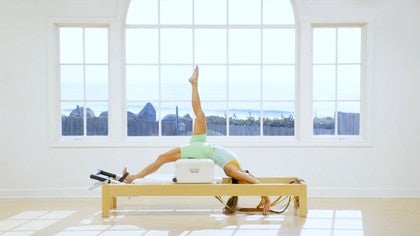
The Reformer, meanwhile, is the iconic Pilates apparatus – the “workhorse” of the studio. At first glance, a Reformer looks like a strange bed or sliding bench with springs, a moving carriage, ropes, and a footbar. This ingenious machine was one of Joseph Pilates’ first inventions and remains central to Pilates practice worldwide. Practicing on the Reformer adds a whole new dimension thanks to the spring resistance and moving platform. The springs (typically light, medium, and heavy options) both challenge and support your movements: they can make an exercise more intense (by adding resistance) or they can assist you (for example, helping lift your legs in exercises that might be too heavy to do unassisted). The Reformer’s sliding carriage introduces an element of instability that forces you to engage your core and stabilizer muscles to control the motion. Lying on a Reformer, you can perform a vast range of exercises in supine, prone, kneeling, or standing positions, targeting every major muscle group with controlled, flowing movements. Classic Reformer sequences sometimes mirror the Mat order (starting with the Hundred as a warm-up, then into movements like Short Spine and Long Stretch series, in a progressive flow). Practitioners love the Reformer for its versatility: in one session, you might do strengthening work for legs and arms, core exercises, stretching, balance work, and more, all on this single apparatus. It’s low-impact on the joints yet can deliver a sweaty, muscle-shaking workout. Because the Reformer offers a high degree of support (the carriage supports your body weight and the springs can assist movements), it’s fantastic for beginners and those rehabbing injuries. And, if you add heavier springs or more advanced exercises, it will also challenge the fittest athletes. This adaptability is why studios often start newcomers on the Reformer: it meets you where you are, providing just the right amount of challenge or support for your level.
Mat and Reformer Pilates together form the core of the Pilates curriculum. Traditionally, a comprehensive Pilates practice includes both. The Mat teaches you how to control your body with no frills; the Reformer helps you build strength and awareness that you can then bring back to the Mat. A brand-new client might even start on a Reformer or Cadillac for introductory work, precisely because the Mat work can be so demanding. Mat and Reformer exercises are complementary. For example, doing the Hundred on the Mat ingrains the basic technique using only your body; doing it on the Reformer or Cadillac with springs adds resistance, highlighting which muscles should fire. Then when you return to the Mat, you can imagine the spring resistance and engage the same muscles more deeply. In this way, each piece of Pilates informs the other, and together Mat and Reformer provide a well-rounded, potent training for the whole body.
Related: If you’re new to Pilates and wondering where to begin, check out our 5 Tips to Get Started with Mat Pilates and consider exploring a beginner Reformer class to experience the support this apparatus offers.
The Pilates Apparatus: Cadillac, Chair, Barrels, and More
Something that surprises many newcomers is that Pilates contains more than Mat and Reformer exercises. Joseph Pilates invented an entire suite of apparatus to support and challenge the body in different ways. In a fully equipped Pilates studio, you might encounter contraptions with memorable names like the Cadillac, Wunda (not Wonder!) Chair, Spine Corrector, or Ped-O-Pul. Each has a specific purpose and adds new “ingredients” to the Pilates recipe, to borrow a metaphor from first-generation teacher Jay Grimes: be “like an expert chef in a well-stocked kitchen,” with every apparatus contributing its special ingredient to create strong and supple bodies. In Joseph Pilates’ original studio, all apparatus were used in concert. You might start on one, transition to another, just as an orchestral piece uses different instruments. Here are some additional key Pilates apparatus and what they bring to the system:

Cadillac (Trapeze Table) – The Cadillac is the largest and perhaps most impressive apparatus, often evoking a four-poster bed frame. The Cadillac (purportedly first named after the “best of everything” luxury car) allows a wide range of exercises from gentle, assisted stretches to advanced work in virtually every position (lying, seated, standing, hanging). Because it doesn’t have a moving carriage like the Reformer, the Cadillac provides a stable base with the assistance of springs and bars, making it accessible and therapeutic for beginners and those rehabbing injuries. For example, an older client or someone with limited mobility might start on the Cadillac because its raised platform is easy to get on and off, and the springs can support the limbs to reduce pressure on the joints. At the same time, Cadillac exercises can be made very challenging. Hanging upside-down from the trapeze, or pullups on the top bar, are reminiscent of gymnastics. The Cadillac is superb for spinal decompression, flexibility, and isolated muscle activation. Exercises like the leg spring series on Cadillac can teach you how to engage correct muscles (the springs give you feedback), which you can then translate to Mat or Reformer work. A pared-down version of the Cadillac is the Tower, which basically uses one end of the Cadillac frame attached to a wall or a Reformer. Tower units offer many of the Cadillac’s benefits in a smaller footprint. You still have springs and a push-through bar, attached to a wall-mounted vertical frame above a Mat or Reformer. bed. Both Cadillac and Tower remain stationary (no rolling platform), which some find less intimidating when starting out. They gently guide your body through proper alignment and range of motion, building confidence and awareness. A further adaptation of the Cadillac/Tower is the Springboard, a modern apparatus that was not part of Joseph Pilates’ original inventions. The Springboard is a simple wall-mounted board with adjustable springs and a bar, to mimic many Tower/Cadillac exercises. The result is a sleek wooden board you bolt to the wall, with eyelets for attaching springs (arm springs, leg springs, and a roll-down bar at the top). The Springboard offers Cadillac-style resistance training in a very compact form. Because it’s flat against the wall, you use your own body as the moving platform (there’s no rolling carriage as on a Reformer). This makes Springboard exercises wonderfully challenging in terms of core control and body awareness.
Wunda Chair – The Wunda Chair is small but mighty. This compact apparatus looks like a simple box with a padded seat and a pedal that presses against spring resistance. The Wunda Chair was actually designed by Joe as the first home exercise equipment. It can flip over to double as a regular sitting chair in your living room! Historically, Joseph would even close his New York studio for the hot month of August and send clients home with a Wunda Chair and a homework list of exercises. In the studio, the chair offers a high degree of challenge: because it’s so small and has a limited surface, you can’t rely on much support. Many Chair exercises are done seated on top, standing on or beside the chair, or even in a plank position with hands or feet on the pedal. It’s a true test of strength, balance, and control. As one instructor quipped, “even the fundamental Wunda Chair exercises are not easy”. For instance, the basic Pull-Up (an exercise where you stand on the pedal and use your powerhouse to lift your body upward) can humble even the strongest of athletes. The Wunda Chair’s springs are heavier than those on a Reformer, so pressing the pedal requires significant power, and because you’re often working against gravity in an upright position, it trains your body to find stability without the comfort of lying down. The Chair is fantastic for building upper-body and lower-body strength (think arm presses, lunges, pushups on the pedal) and for challenging your core stability in a vertical orientation. In the broader Pilates system, Chairs (including the larger High Chair and the Arm Chair) are used to refine specific skills. They help pinpoint weaker links in your strength or alignment that you can then improve, which will then strengthen your work on the Reformer and Mat. Because of its difficulty, students often learn a few basic moves on the more supportive High Chair before advancing to the Wunda Chair. Over time, dedicated practitioners can perform full sequences on the Wunda Chair, gaining a whole new level of body control.
Barrels (Spine Corrector & Ladder Barrel) – Pilates also includes barrel-shaped apparatus that primarily assist with spinal extension, core strength, and flexibility. The Ladder Barrel is a large arc combined with a ladder-like frame; you can hook your legs or hands on the rungs and lean over the barrel to stretch or strengthen the torso. It’s excellent for opening the chest, improving hip flexibility, and practicing challenging backbends with support. The Spine Corrector (also called Small Barrel or Arc Barrel) is essentially a portable arch with a step or ledge. The Spine Corrector works wonders for mobilizing the spine and correcting imbalances. Lying back over the arc gives a delicious stretch to the chest and hip flexors (counteracting our daily slouching), and doing abdominal exercises over the barrel adds challenge by opening the ribcage and extension range. These Barrels support the spine’s natural curves, allowing exercises that increase spinal flexibility, strengthen the core, and improve posture. Many Pilates studios incorporate Barrel exercises for clients who need extra help achieving extension or for adding variety to core work. They are also commonly used in physical therapy settings for gentle stretching.
Ped-O-Pul – One of the lesser-known original apparatus, the Ped-O-Pul is basically a T-shaped pole with springs attached, mounted on a small base. You stand and hold the pole (or handles attached to it) and practice exercises that challenge your alignment and arm strength against the spring resistance. The Ped-O-Pul is excellent for training upright posture, shoulder stability, and balance. Because you have to stand freely (sometimes on a small board) while moving your arms, it reveals any tendency to sway or lose alignment. It’s often used for refining shoulder mechanics (great for rehabilitating shoulder injuries) and for advanced core control. Though not as common in modern studios, the Ped-O-Pul remains a favorite for certain schools of Pilates to teach steadiness and proper vertical posture.
Magic Circle and Small Props – In addition to the larger apparatus, Pilates includes various small props that Joseph Pilates invented or that have been adopted over the years. The Magic Circle provides gentle to moderate resistance and is used to activate certain muscle groups, commonly the inner thighs, chest, or glutes, during Mat and Reformer exercises. It’s a simple prop that instantly introduces more challenge or feedback. Other small apparatus and props include the Foot Corrector (a small spring-loaded device to strengthen the feet and arches), Toe Gizmo/Toe Corrector (for toe strength and alignment), Hand Tensometer (for grip and forearm strength), foam rollers, therapy balls, resistance bands, and more. While these weren’t all part of Joseph’s original studio (foam rollers and bands are more modern additions), contemporary Pilates often integrates them to address specific needs or to add variety. Props can help beginners find the right muscle connections (for example, squeezing a small ball between the knees to engage inner thighs) or can make an advanced exercise even more difficult (try doing the Series of Five abdominals with a Magic Circle between your ankles!).


All these apparatus and props serve a common purpose: to support the body’s alignment and provide resistance or assistance in the Pilates exercises. Many Pilates exercises have versions on multiple apparatus. For instance, the classic Leg Circles can be done on the Mat (purely using core control) or on the Cadillac with leg springs. On the apparatus, the springs give tactile feedback and gentle help, teaching you which muscles to engage; when you do the same exercise back on the Mat, you can then replicate that feeling even without the springs. In this way, the apparatus create a sort of dance with each other, each illuminating different aspects of movement. The end goal across all apparatus is the same: balanced strength, flexibility, control, and a body that moves with ease and integrity. A fun realization is when you reach the point in your Pilates practice where you notice the repetition of movements in different orientations on different apparatus.
Related: Curious about a specific apparatus? Explore more in-depth resources like Benefits of the Pilates Cadillac and Tower, The Wunda Chair: Small but Mighty, and tutorials on using the Spine Corrector and other props, available on our site.

Pilates for Every Body – Adaptable, Challenging, and Inspiring
One of the most beautiful aspects of Pilates is that it truly is for every body. The method’s diversity of apparatus and exercises means it can be tailored to individual needs, which is why you’ll find Pilates being used in settings ranging from elite sports training to physical therapy clinics. First-generation teacher Kathy Grant reminded us that “one size doesn’t fit all. Pilates is here to customize, to create options.” Whether you’re a beginner who hasn’t exercised in years or an athlete looking to up your game, Pilates meets you where you are. A well-trained Pilates instructor can modify exercises to be gentler or more challenging, swap in a supportive apparatus, or introduce props to help you find success. For example, if you struggle with a roll-up on the Mat, they might slide a strap over your feet to assist. As you get stronger, the supports are removed and more complexity can be added. This built-in progression is why Pilates is often described as “layered.” You start with foundational movements and, as you master them, you layer on greater difficulty or nuance. “There’s plenty of support within the brilliant system that allows clients to build their skill set. You can start small on the Cadillac with well-supported movements, and then keep expanding from there,” explains second-generation teacher Cara Reeser, highlighting how the method provides graded exposure to new movements for learners. In Pilates, you never really “finish” or outgrow the basics – you just keep refining them and adding new challenges. In fact, the more you practice, the more you appreciate the subtleties, and even simple exercises can be tuned to be even more challenging (e.g. doing them with more precision, or with less support). All Pilates exercises can become harder, not easier, over time as you become more aware of your body’s habits and strive for even greater precision. This means Pilates has a long-term growth curve: it continues to challenge you in new ways as you advance, keeping it perpetually interesting.
Pilates is also incredibly versatile in its benefits. Many people are drawn to it for core strength and it also offers improvements in balance, coordination, and even mental focus. Because Pilates emphasizes proper alignment and smooth, controlled motions, it reduces wear-and-tear on joints even as it strengthens the supporting muscles. This makes it a go-to choice for rehabilitation from injuries and for those with chronic pain or conditions. For example, Pilates for back pain is now a well-established application – by strengthening the core and decompressing the spine, Pilates can alleviate many common back issues.
Pilates is equally valuable for older adults, and it’s never too late to start. In the context of active aging, Pilates might be one of the best forms of exercise to age gracefully and maintain independence. It’s low-impact and can be adapted around issues like osteoporosis, arthritis, or limited mobility. As Cara Reeser notes, “The Pilates system is asking you to start where you are, no matter your condition… Pilates offers that opportunity in a way no other modality offers.” She has worked with clients in their 90s, proving its scalability. In classes designed for seniors or active agers, there may be a greater emphasis on extension (back-bending) work, balance practice, and weight-bearing exercises in safe ranges. For instance, Pilates teachers will often avoid deep forward flexion for clients with low bone density, focusing instead on gentle back extensions and core stabilization. The apparatus can be extremely helpful here: the Cadillac’s support or the Chair’s assistance can allow even those with joint issues to exercise without pain. The goal is always to help people move better in daily life, whether that means carrying groceries with ease, playing with grandchildren, or simply walking tall with confidence. As Cara recounts, a good instructor can reframe the mindset for an older client: you can stay strong and active, and common issues like a knee replacement or a bit of arthritis are not insurmountable roadblocks. Pilates fosters a positive relationship with one’s changing body: rather than feeling discouraged by aging, practitioners learn to appreciate what their bodies can do and continually improve their capacity. (Interested in this topic? Read more in How To Age Actively with Pilates, and explore our Empowered Aging program for workouts tailored to older adults.)
Pilates has a unique way of fostering a sense of empowerment and confidence. As you learn to master movements you once found challenging, you build trust in your body’s capabilities. Over time, posture improves, you carry yourself differently, and that often translates into improved confidence in daily life. One Pilates Anytime member beautifully summarized their experience: “By learning how to move from my core, I can do everything I want to do, pain free… Pilates taught me to do everything I want to do by relearning how to do it in a mindful way.” This sentiment captures how Pilates isn’t just about what you do in the studio – it’s about enhancing everything you do outside the studio, from sports to picking up your child, to sitting at your desk. The true “Pilates magic” is when the body awareness and control you gain in class seamlessly become part of your everyday movement.
Related: Explore Pilates for Rehabilitation success stories, and how Pilates principles carry over into sports and functional fitness in our article on Pilates Benefits.

Embracing the Pilates Journey
Pilates is often called a practice rather than a workout, and indeed, it rewards dedication and curiosity. With its rich history, established lineage, and ever-evolving contemporary research, Pilates continues to grow while staying true to its core tenets. Whether you’re lying on the Mat doing The Hundred, performing a graceful Teaser on the Reformer, or tackling a challenging High Bridge on the Wunda Chair, you are participating in a century-old tradition of mindful movement. As practitioners and teachers on Pilates Anytime frequently emphasize, Pilates is about quality of movement over quantity – a philosophy that can transform how you approach exercise and even daily tasks. It’s a journey of continuous learning: the more you delve into it, the more there is to discover, be it a subtle alignment tweak that makes an exercise feel brand new, or an advanced variation you never thought you’d achieve.
The legacy of Joseph Pilates lives on every time you engage your powerhouse to initiate a movement or take a deep, controlled breath to center yourself. And thanks to the contributions of many dedicated teachers over the decades, we now have a wealth of knowledge – from “classical” Pilates that preserves Joseph's original repertoire and sequencing, to contemporary adaptations that incorporate modern science and creativity. No matter the style, any authentic Pilates class will carry that DNA of mindful, integrated movement that makes Pilates so special.
In summary, Pilates is a complete, intelligent movement system that trains the body and mind together. It offers a structured yet adaptable approach to exercise, whole-body coordination, core-centered strength, dynamic stretching, and breath-fueled control. The Mat and Reformer form the core of the work, while the other apparatus and props add depth and insight to the practice. Pilates can be gentle or extremely challenging, making it accessible to beginners and endlessly intriguing to seasoned practitioners. Its benefits go far beyond a toned physique: Pilates can improve your posture, alleviate pain, enhance athletic performance, and give you tools to move through life with more grace and confidence. As you cultivate awareness and balance in the studio, you carry those qualities into your daily life – standing taller, moving smarter, and feeling better in your own skin.
If you’ve been wondering "What is Pilates?" the best way to truly understand it is to experience it. We invite you to explore our extensive library of Pilates classes on PilatesAnytime.com, from foundational beginner series to specialized workshops on history and technique, and feel for yourself what this remarkable method can do.


Comments
No comments yet. Be the first!







You need to be a subscriber to post a comment.
Please Log In or Create an Account to start your free trial.